ninja food processor instruction manual

Ninja Food Processor Instruction Manual: A Comprehensive Guide
Welcome! This manual details the Ninja Professional Plus Kitchen System, featuring Auto-iQ technology, and provides guidance for models like BN600, BN801, and the XL series.
Congratulations on selecting a Ninja Food Processor! This appliance is engineered to revolutionize your kitchen, offering powerful performance and versatile functionality. Whether you’re chopping vegetables, kneading dough, or creating smooth purees, the Ninja system delivers consistent, professional-quality results.
The Ninja Professional Plus Kitchen System, and models like the BN600 and BN801, boast a robust motor – up to 1000 peak watts – capable of handling even the toughest ingredients. Auto-iQ technology takes the guesswork out of food preparation with intelligent preset programs. This manual will guide you through assembly, operation, cleaning, and troubleshooting, ensuring you maximize your Ninja’s potential. Explore the possibilities and unlock a new level of culinary convenience!
Unboxing and Component Identification
Carefully unpack your Ninja Food Processor and verify all components are present; You should find the motor base, processing bowl (9-cup for BN600, 12-cup for XL models), lid with push-button release, and various blades/discs. These include the chopping blade, dough blade, shredding disc, and slicing disc.
Refer to the included parts diagram to familiarize yourself with each component. Ensure no parts are damaged during shipping. The Ninja Professional Plus (BN801) may include additional accessories. Keep the packaging for potential future transport or warranty claims. Proper identification of each part is crucial for safe and effective operation. Familiarize yourself with the lid locking mechanism before proceeding.
Safety Precautions and Important Warnings
Always unplug the Ninja Food Processor before cleaning or assembling/disassembling. Never operate the appliance with a damaged cord or plug. Keep hands and utensils away from moving blades during operation – serious injury can occur. Ensure the lid is securely locked in place before starting the motor.

Do not immerse the motor base in water or other liquids. Never operate the appliance continuously for extended periods; allow it to cool down. This appliance is not intended for use by children. Supervise use near children. Read all instructions carefully before use to avoid potential hazards and ensure safe operation.

Understanding the Control Panel
Explore the intuitive control panel featuring Auto-iQ technology, pulse functions, and adjustable speed settings (Low, Medium, High) for precise food preparation.
Auto-iQ Technology Explained
Ninja’s Auto-iQ represents a significant advancement in food processing convenience. This intelligent technology delivers pre-programmed patterns that pulse, pause, and blend, eliminating the guesswork from achieving perfect results.
Unlike manual operation, Auto-iQ takes over, optimizing the processing time for tasks like chopping, dough making, or pureeing. The Ninja Professional Plus Kitchen System, and models like the BN801, boast enhanced Auto-iQ programs compared to earlier versions like the BL770.
These preset programs are designed to mimic the techniques of a professional chef, ensuring consistent texture and quality. Simply select the appropriate Auto-iQ setting, and let the Ninja food processor do the work, freeing you to focus on other aspects of meal preparation.
Pulse Function: Mastering Control
The Pulse function on your Ninja food processor offers unparalleled control over texture and consistency. Unlike continuous operation, pulsing delivers short bursts of power when the Pulse button is pressed and held. This is ideal for tasks requiring precise chopping or preventing over-processing.
For example, when chopping vegetables, use the Pulse function to achieve a desired coarseness without turning them into puree. Similarly, when making sauces or salsas, pulsing allows you to control the chunkiness.
Mastering the Pulse function involves experimenting with the duration and frequency of the pulses. It’s a crucial technique for achieving professional-quality results and customizing your recipes to your exact preferences, offering a level of control beyond Auto-iQ presets.
Speed Settings: Low, Medium, High
Your Ninja food processor features three distinct speed settings – Low, Medium, and High – each designed for specific processing tasks. Low speed is perfect for delicate ingredients like soft fruits or mixing batters, preventing excessive blending. Medium speed excels at general chopping, slicing, and shredding of vegetables and cheeses, offering a balance between power and control.
High speed is reserved for tougher ingredients, such as frozen fruits, ice, or creating smooth purees and sauces. It delivers maximum power for efficient processing. Remember to start with a lower speed and gradually increase it as needed to avoid splattering or uneven results. Experimenting with these settings unlocks the full potential of your Ninja!
Assembling Your Ninja Food Processor
Proper assembly is crucial for safe and efficient operation; Ensure the processing bowl is securely attached, the blade is correctly installed, and the lid locks firmly.
Attaching the Processing Bowl
Securely positioning the processing bowl is the first step in assembling your Ninja Food Processor. Begin by ensuring the base is placed on a flat, stable surface. Carefully align the processing bowl with the base, noting the designated locking points.
Gently lower the bowl onto the base and rotate it clockwise until it clicks into place. This audible click confirms a secure connection, preventing movement during operation. Do not force the bowl; if resistance is met, re-align and try again.
A properly attached bowl is essential for preventing leaks and ensuring optimal performance. Always verify the bowl is locked before adding ingredients or operating the appliance. Refer to your specific model’s diagram for precise alignment guidance.
Blade Assembly: Correct Installation
Proper blade installation is crucial for safe and effective food processing. Before attaching any blade, always ensure the processing bowl is securely locked onto the base. Carefully select the appropriate blade for your desired task – chopping, dough making, shredding, or slicing.
Align the blade with the center post inside the bowl. Gently push down until it clicks firmly into place. Never attempt to force the blade. Ensure it’s fully seated and stable before proceeding. Incorrectly installed blades can lead to malfunction or injury.
Double-check the blade’s security before adding ingredients. Refer to your model’s diagram for specific blade placement. Remember, a secure blade is paramount for consistent results and safe operation.
Lid Locking Mechanism: Ensuring Safety
The lid locking mechanism is a vital safety feature of your Ninja Food Processor. It prevents operation unless the lid is securely fastened, protecting you from potential hazards. Locate the locking tabs on either side of the lid and align them with the corresponding slots on the processing bowl.
Press down firmly on both sides of the lid until you hear a distinct “click.” This indicates the lid is properly locked. Never attempt to operate the processor if the lid isn’t fully locked; the unit will not start.
To unlock, simultaneously press the release buttons on the sides of the lid and lift. Regularly inspect the locking tabs for damage or debris. A functioning lock is essential for safe operation.

Basic Operation & Recipes
Explore culinary possibilities! This section guides you through chopping, dough making, and pureeing, utilizing the Ninja’s power for consistent, delicious results every time.
Chopping Vegetables: A Step-by-Step Guide
Preparation is key! Begin by washing and roughly chopping your desired vegetables into uniform sizes – approximately 1-inch pieces work best for consistent results. Ensure the processing bowl is securely attached to the Ninja Food Processor base.
Next, carefully insert the chopping blade into the bowl, ensuring it’s firmly locked in place. Add the vegetables, avoiding overfilling – work in batches if necessary. Secure the lid, aligning the locking tabs and twisting to lock.
Select the ‘Chop’ Auto-iQ preset, or utilize the Pulse function for precise control. For a coarser chop, use short pulses; for finer results, allow the machine to run continuously. Always monitor the chopping process and adjust as needed.
Making Dough: Achieving Perfect Consistency
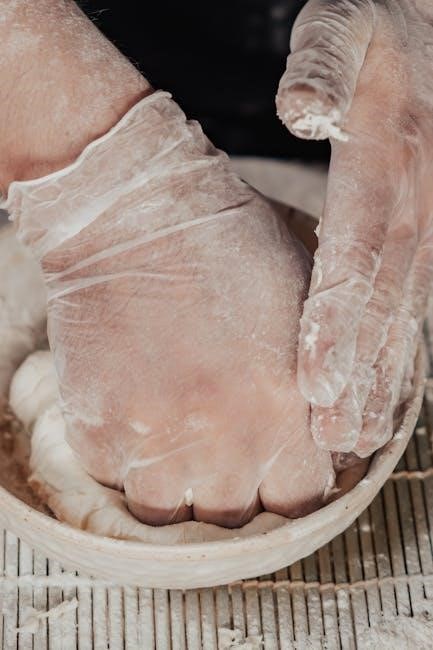
Dough making simplified! Begin by combining your dry and wet ingredients directly into the processing bowl. The Ninja Food Processor, equipped with the dough blade, excels at creating various doughs – from pizza to pastry.
Securely attach the dough blade, ensuring it clicks into place. Lock the lid, and select the ‘Dough’ Auto-iQ preset. This program is designed to knead the dough to the ideal consistency.

If using manual control, start with short pulses, gradually increasing the duration. Monitor the dough’s formation; it should come together into a smooth ball. Avoid over-processing, which can result in tough dough. If needed, scrape down the sides of the bowl during processing.
Pureeing Soups and Sauces: Smooth Results
Achieve velvety textures! The Ninja Food Processor is perfect for creating smooth, creamy soups and sauces. Begin by ensuring your cooked ingredients have cooled slightly – hot liquids can create pressure.
Pour the mixture into the processing bowl, filling it no more than halfway to prevent splattering. Secure the lid and select a suitable speed setting. Start with ‘Low’ and gradually increase to ‘Medium’ or ‘High’ for a finer puree.
Utilize the ‘Pulse’ function for controlled bursts, allowing you to monitor the consistency. For exceptionally smooth results, consider using the Auto-iQ programs designed for blending. Always exercise caution when processing hot liquids!
Advanced Features & Techniques
Unlock full potential! Explore shredding, slicing discs, the dough blade, and Auto-iQ preset programs for bread, pastry, and consistently perfect results.
Shredding and Slicing Discs: Usage Tips
Maximize efficiency with discs! Ensure the processing bowl is securely attached before using shredding or slicing discs. Always install the disc correctly, aligning the locking tabs. For optimal results, cut larger vegetables – like carrots or potatoes – into smaller, uniform pieces that fit easily into the feed tube.
Apply consistent, gentle pressure when using the pusher to guide food through the disc. Avoid forcing ingredients, as this can impact performance and consistency. Remember to pulse briefly to clear the disc if clogging occurs. After use, carefully remove the disc; caution: blades are sharp! Hand wash discs immediately for easier cleaning and to prevent food residue buildup.
Using the Dough Blade: Bread and Pastry
Achieve perfect dough consistency! When making bread or pastry, always use the dedicated dough blade. Add wet and dry ingredients to the processing bowl, then pulse several times to initially combine. Allow the machine to run continuously, monitoring the dough’s consistency.
The Ninja’s powerful motor effortlessly kneads dough, but avoid over-processing, which can result in tough textures. For thicker doughs, you may need to scrape down the sides of the bowl periodically. Remember, the Auto-iQ preset programs offer convenient options for dough making, simplifying the process. Clean the dough blade immediately after use to prevent dough from drying and sticking.
Auto-iQ Preset Programs: Detailed Breakdown
Unlock effortless processing! Ninja’s Auto-iQ technology delivers intelligent, pre-programmed settings for optimal results. The Chop function provides coarse or fine chopping with pulsing patterns. The Dough setting expertly kneads bread and pastry doughs, while the Slice & Shred programs create uniform slices and shreds.
These programs automatically vary speed and pause for consistent processing. The BN600 model features three Auto-iQ presets, while newer models like the BN801 may offer expanded options. Refer to your specific model’s chart for detailed program durations and functions. Auto-iQ simplifies complex tasks, ensuring perfectly processed ingredients every time.

Cleaning and Maintenance
Keep your Ninja pristine! Disassemble for thorough cleaning; many parts are dishwasher safe. Proper storage extends the lifespan of your appliance and ensures optimal performance.
Disassembly for Thorough Cleaning
Ensuring hygienic operation requires complete disassembly after each use. Begin by unplugging the Ninja Food Processor. Carefully remove the processing bowl from the motor base. Detach the blade assembly – exercise caution as blades are sharp! The lid also disassembles; locate and release the locking mechanism before removing.
Separate all components, including discs and other attachments. Wash all dishwasher-safe parts on the top rack. Handwash the motor base with a damp cloth; never immerse it in water. Thoroughly dry all parts before reassembling. Inspect blades for damage and replace if necessary. Proper disassembly prevents food buildup and maintains peak performance.
Dishwasher Safe Parts: What You Can Wash
Convenience is key! Many Ninja Food Processor components are designed for easy cleaning in your dishwasher. Specifically, the processing bowl, lid, and all included discs – shredding, slicing, and dough blades – are typically dishwasher safe. However, always place these items on the top rack to avoid heat damage.
Important: The motor base must never be placed in the dishwasher or submerged in water. Handwash it with a damp cloth only. While dishwasher use is convenient, handwashing can prolong the lifespan of certain parts. Ensure all parts are thoroughly dried before reassembly to prevent any issues.
Proper Storage: Extending Lifespan
Maximize your investment! Proper storage significantly extends the life of your Ninja Food Processor. Before storing, ensure all components are completely clean and dry to prevent mold or mildew. Store the motor base in a cool, dry place, away from direct sunlight and extreme temperatures.
Protect the blades! When storing blades and discs, consider using the provided protective covers or wrapping them securely to prevent accidental cuts and damage. Avoid stacking heavy items on top of the food processor or its components. A dedicated cabinet or shelf is ideal. Proper care ensures years of reliable performance!
Troubleshooting Common Issues
Resolve quickly! This section addresses issues like a motor that won’t start, blades failing to rotate, or a lid that won’t lock securely.
Motor Not Starting: Possible Causes
Troubleshooting a non-responsive motor requires a systematic check. First, ensure the power cord is firmly plugged into a working outlet. Verify the unit is properly assembled – the bowl, blade, and lid must be securely locked in place; the Ninja won’t operate otherwise.
Check the Auto-iQ settings or pulse function; sometimes, a setting isn’t fully engaged. Overloaded ingredients can also stall the motor; reduce the quantity and try again. If the motor still fails to start, a reset might be necessary – unplug the unit for several minutes before reconnecting.
Finally, if these steps don’t resolve the issue, consult the full manual or contact Ninja customer support for further assistance, as it could indicate a more serious problem.
Blade Not Rotating: Solutions
If the blade isn’t rotating, several factors could be at play. Begin by confirming proper assembly: the blade assembly must be correctly installed and seated firmly onto the drive connection within the processing bowl. Ensure no food particles are obstructing the blade’s movement – carefully remove any visible obstructions.
Overfilling the bowl can also prevent rotation; reduce the ingredient quantity. Check for any damage to the blade or the drive mechanism. If the motor is humming but the blade isn’t turning, it suggests a connection issue.
Unplug the unit, disassemble, and reassemble carefully. If the problem persists, contact Ninja support, as internal component damage may require professional repair.
Lid Not Locking: Troubleshooting Steps
A secure lid lock is crucial for safe operation. If the lid isn’t locking, first ensure it’s properly aligned with the processing bowl. Check for any food debris obstructing the locking mechanism – clean thoroughly around the lid’s rim and the bowl’s connection points.
The Ninja system features a safety interlock; the motor won’t run unless the lid is securely fastened. Verify the lid is rotated fully until it clicks into place. Avoid forcing it; excessive pressure could damage the locking tabs.
If issues continue, inspect the locking tabs for any cracks or damage. Contact Ninja customer support if the mechanism appears faulty, as repair or replacement may be necessary.

Model Comparison: Ninja Professional Series
Explore the range! Compare the BN600, BN801, and Ninja Professional XL (12-cup) models, noting differences in Auto-iQ programs and capacity for optimal use.
BN600 vs. BN801: Key Differences
Distinguishing Features: The Ninja Professional 9-Cup Food Processor (BN600) and the Ninja Professional Plus Kitchen System (BN801) both offer powerful performance, but several key distinctions exist. The BN801 represents an evolution, boasting a more modern design and increased functionality compared to the original BN770 and, consequently, the BN600.
Auto-iQ Advancements: While both utilize Auto-iQ technology, the BN801 generally features a greater number of available blending programs. This translates to more pre-programmed settings for specific tasks, simplifying complex recipes. The BN600 provides three presets – Chop, Dough, and Slice/Shred – offering excellent versatility, but the BN801 expands upon this.
Overall System: The BN801 is often sold as a complete kitchen system, potentially including additional attachments or blending cups not found with the standalone BN600 model. Consider your needs – if a comprehensive system is desired, the BN801 is the superior choice.
Ninja Professional XL: 12-Cup Capacity
Enhanced Processing Power: The Ninja Professional XL Food Processor is designed for larger families or those who frequently prepare meals in bulk. Its defining feature is the generous 12-cup capacity, significantly exceeding the 9-cup capacity of standard models like the BN600. This allows for processing larger quantities of ingredients with fewer batches, saving valuable time in the kitchen.
Robust Performance: Despite the increased capacity, the XL model maintains Ninja’s commitment to powerful performance. It features a robust motor capable of handling substantial workloads, ensuring consistent results whether chopping, shredding, or pureeing.
Ideal for Batch Cooking: This model is particularly well-suited for batch cooking, meal prepping, or preparing ingredients for parties and gatherings. The larger bowl minimizes interruptions and streamlines the food preparation process. It typically includes two blades for versatile functionality.
Auto-iQ Updates Across Models
Evolving Intelligence: Ninja’s Auto-iQ technology has seen iterative improvements across different models, enhancing user convenience and processing precision. Early iterations, found in the BN600, offered three preset programs – Chop, Dough, and Slice/Shred. Later models, like the BN801 (Ninja Professional Plus Kitchen System), expanded these options with additional Auto-iQ programs tailored for specific tasks.
Expanded Functionality: These updates often include refined pulse patterns, varying speed combinations, and optimized processing times. The goal is to automate complex tasks, delivering consistently perfect results with minimal user intervention.
User-Friendly Design: Auto-iQ isn’t just about adding programs; it’s about intelligent design. Newer models may feature more intuitive control panels and clearer program indicators, making it easier to select the appropriate setting for your recipe.



Leave a Reply
You must be logged in to post a comment.